Lauregan | House Plans | New Home Inspiration | Penny Homes
Lauregan Penny Homes Banner Image

Lauregan

icon 3
icon 2
icon 2

175m2

Floor Area

Project details

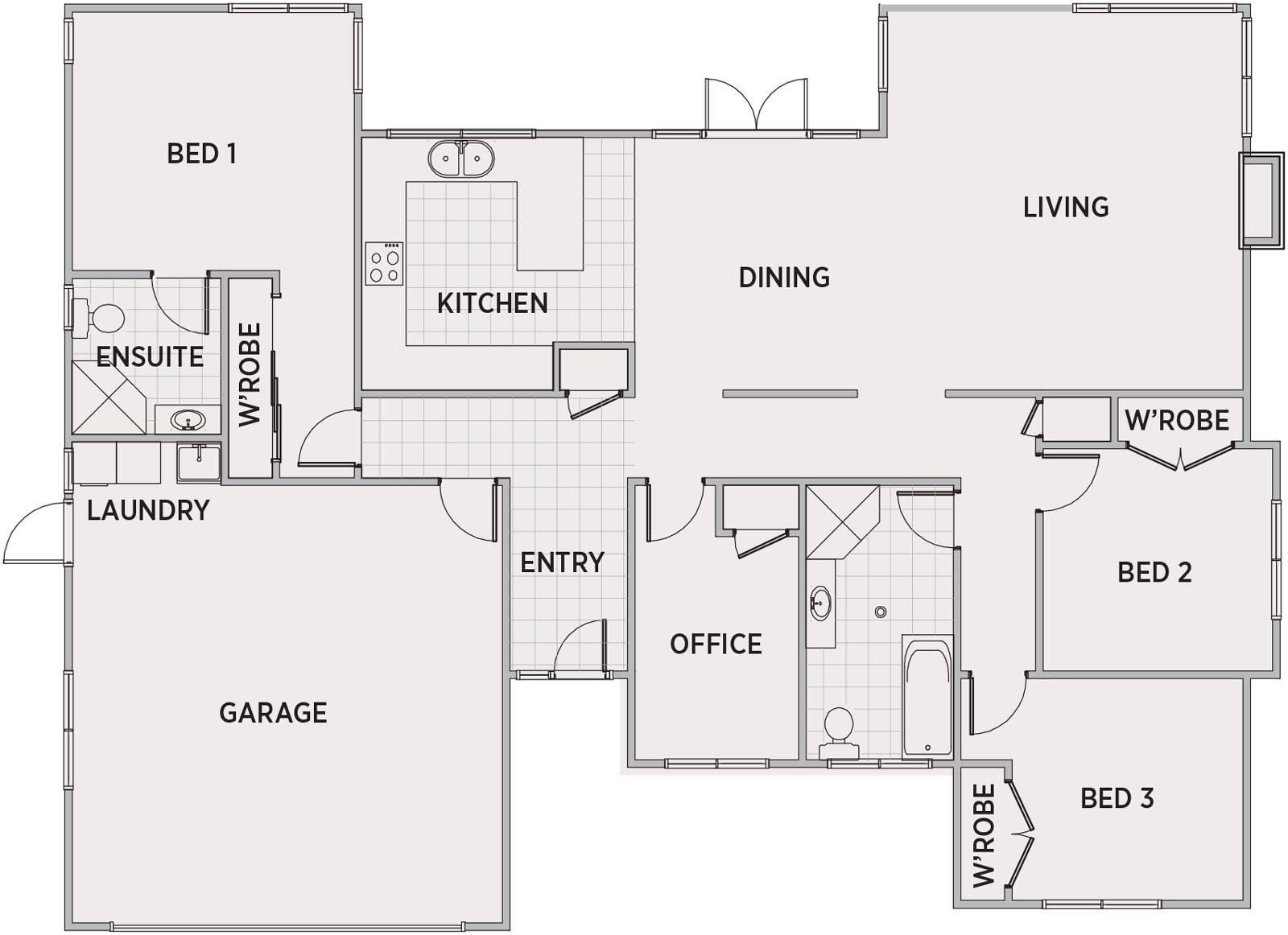
Solid and stylish – statement making with all the design essentials. This classic mono pitch brick and linea weatherboard home features an open-plan kitchen, dining and family space which extends onto a private courtyard, an additional office space which is conveniently positioned close to the entranceway, and three good sized bedrooms. Room to move, places to relax in – Lauregan delivers both.

The Historical Development of Casino Gaming Through Casizoid Research

The evolution of casino gaming represents one of the most fascinating journeys in entertainment history, spanning centuries of cultural transformation and technological innovation. From ancient dice games played in Roman forums to sophisticated digital platforms accessible worldwide, the gaming industry has continuously adapted to societal changes while maintaining its core appeal. Understanding this historical trajectory requires rigorous academic inquiry and systematic documentation of how gambling establishments evolved from exclusive aristocratic salons to mainstream entertainment venues. The comprehensive study of this development provides valuable insights into human psychology, economic patterns, and the intersection of technology with traditional leisure activities.

Ancient Origins and Early Formalization

The roots of organized gaming stretch back to ancient civilizations, where gambling served both recreational and ritualistic purposes. Archaeological evidence from Mesopotamia reveals dice-like objects dating to 3000 BCE, while ancient Chinese texts document rudimentary lottery systems used to fund state projects. The Romans popularized betting on gladiatorial contests and chariot races, establishing the foundational concept of wagering on uncertain outcomes. However, the first recognizable casino structure emerged in 1638 when Venice opened the Ridotto, a government-sanctioned gambling house designed to provide controlled gaming during carnival season. This establishment introduced crucial concepts still relevant today: regulated operations, designated gaming spaces, and institutional oversight. The Ridotto operated for nearly a century before closing in 1774, but it established a template that would influence European gaming culture for generations.

Throughout the 17th and 18th centuries, gaming houses proliferated across Europe, particularly in spa towns and aristocratic gathering places. These establishments catered to the wealthy elite, offering games like faro, baccarat, and early versions of roulette. The social dimension of these venues proved as important as the gaming itself, with casinos becoming centers of political discourse and cultural exchange. The formalization of rules and standardization of games during this period laid groundwork for the modern casino industry, transforming gambling from informal wagering into structured entertainment with defined parameters and mathematical probabilities.

The American Frontier and Modern Casino Emergence

The migration of casino culture to America created an entirely new chapter in gaming history. Riverboat casinos along the Mississippi River during the 1800s brought gambling to frontier communities, operating in a largely unregulated environment that fostered both innovation and excess. The California Gold Rush further accelerated gaming’s expansion westward, with makeshift gambling halls appearing in mining camps throughout the Sierra Nevada. These rough establishments bore little resemblance to European elegance, focusing instead on accessibility and rapid play suited to transient populations seeking fortune.

Nevada’s legalization of gambling in 1931 marked a pivotal transformation in casino history. Las Vegas evolved from a desert railroad town into the world’s gaming capital, with establishments like the Flamingo, opened by Bugsy Siegel in 1946, introducing the integrated resort concept combining lodging, entertainment, and gaming. This model revolutionized the industry by positioning casinos as comprehensive entertainment destinations rather than single-purpose gambling venues. The subsequent decades witnessed increasing sophistication in casino operations, with corporations replacing individual operators and professional management systems standardizing practices across properties. Research institutions and gaming analysts began systematic study of player behavior, game mathematics, and operational efficiency, transforming casino management from intuition-based practice into data-driven science.

Academic Research and Industry Evolution

The professionalization of casino gaming necessitated rigorous academic investigation into its various dimensions. Universities established gaming research programs examining everything from probability theory to addiction psychology, while industry organizations commissioned studies on economic impact and regulatory effectiveness. This scholarly attention legitimized gaming as a subject worthy of serious intellectual inquiry rather than mere vice or frivolous pastime. Researchers documented how technological advances transformed gaming experiences, from electromechanical slot machines in the 1960s to computerized systems enabling progressive jackpots and networked gaming.

The comprehensive analysis conducted through platforms like Casizoid has contributed significantly to understanding how casino gaming evolved across different cultural contexts and regulatory environments. Such research examines comparative development patterns, analyzing why certain jurisdictions embraced gaming while others maintained prohibitions, and how these policy choices influenced economic outcomes and social dynamics. Academic journals now regularly publish peer-reviewed studies on gaming history, with scholars applying methodologies from economics, sociology, psychology, and anthropology to understand this complex phenomenon. This multidisciplinary approach has revealed gaming’s role in urban development, tourism economics, and entertainment industry evolution, providing evidence-based insights that inform contemporary policy discussions.

The digital revolution of the late 20th century introduced another transformative phase. The first online casino launched in 1996, creating entirely new research questions about virtual gaming environments, cross-border regulation, and digital security. Researchers tracked how internet gaming attracted different demographics than traditional casinos, expanded accessibility, and challenged existing regulatory frameworks designed for physical establishments. Mobile technology further accelerated this transformation, enabling gaming experiences integrated into daily life rather than confined to specific destinations. Contemporary research now addresses artificial intelligence applications in gaming, cryptocurrency integration, and virtual reality experiences that may define the industry’s future direction.

Global Expansion and Cultural Adaptation

Casino gaming’s spread across global markets demonstrates remarkable cultural adaptability. Macau’s transformation from Portuguese colony to the world’s largest gaming market illustrates how traditional games like baccarat gained unprecedented popularity when introduced to Asian markets with appropriate cultural modifications. Singapore’s integrated resort model, combining casinos with convention centers, shopping complexes, and cultural attractions, represents sophisticated urban planning that positions gaming as one component within broader entertainment ecosystems. European markets maintained distinct characteristics, with elegant casino traditions in Monaco and Baden-Baden contrasting sharply with American-style mega-resorts.

Indigenous gaming in North America created unique legal and economic dynamics, with tribal casinos generating substantial revenue while raising complex questions about sovereignty, economic development, and cultural preservation. Australian gaming machines, known as “pokies,” developed distinctive features reflecting local preferences and regulatory requirements. This global diversification demonstrates that casino gaming, while sharing common mathematical principles, manifests differently across cultural contexts, adapting to local values, aesthetic preferences, and social norms. Research documenting these variations provides valuable comparative data for understanding how entertainment industries globalize while maintaining regional distinctiveness.

The evolution of casino gaming reflects broader patterns in entertainment history, technological adoption, and economic development. From ancient dice games to sophisticated digital platforms, gaming has continuously transformed while maintaining fundamental appeal rooted in human psychology. Comprehensive historical research reveals how regulatory frameworks, technological capabilities, and cultural attitudes shaped industry development across different eras and geographic regions. Understanding this trajectory provides essential context for contemporary discussions about gaming’s role in entertainment, tourism, and economic development, while offering lessons applicable to other industries navigating technological disruption and changing social attitudes. The ongoing documentation and analysis of gaming history ensures that future developments build upon accumulated knowledge rather than repeating past mistakes, contributing to more responsible and sustainable industry practices.

icon Download Plan
Lauregan Floor Plan | Penny Homes

Other

House Plans | Text image
Ceretto Property Small Image

Ceretto

Townhouse

117m2

Floor Area

icon 3
icon 2
icon 1
Monte Bello Property Small Image

Monte Bello

Townhouse

124m2

Floor Area

icon 3
icon 2
icon 1
Wyndham Property Small Image

Wyndham

Townhouse

152m2

Floor Area

icon 3
icon 2
icon 2
Trinity Property Small Image

Trinity

Townhouse

158m2

Floor Area

icon 3
icon 2
icon 2
Monte Lena Property Small Image

Monte Lena

Townhouse

161m2

Floor Area

icon 3
icon 2
icon 2
Yarra Property Small Image

Yarra

Townhouse

164m2

Floor Area

icon 3
icon 2
icon 2
Chateau Property Small Image

Chateau

Townhouse

164m2

Floor Area

icon 3
icon 2
icon 2
Oxford Property Small Image

Oxford

Townhouse

165m2

Floor Area

icon 3
icon 2
icon 2

Complete House Plans Guide

The Penny Homes Designed to Inspire guide features a complete collection of thoughtfully designed house plans. With floor plans ranging from 180m² to over 300m², plus a wide selection of exterior finishes, interior styles and customisation options, our house designs suit everything from a first home to a forever home. Each design is created to maximise space, functionality and value without compromising on style.

Sell Your property with Penny Homes